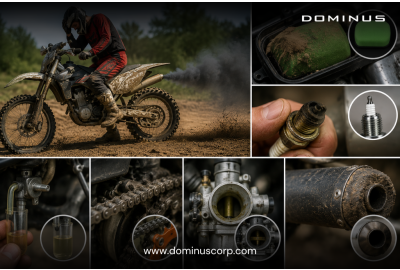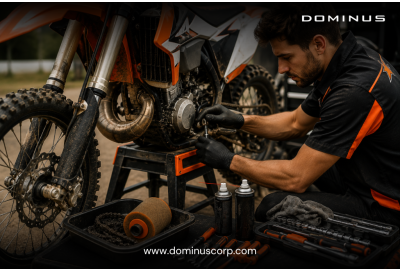
Professional dirt bike riders maintain their bikes through a disciplined post-ride checklist — not pre-ride panic. The best dirt bike air filter gets cleaned after every ride in dusty or sandy conditions. Brake pads and rotors are inspected every 10–15 hours. Sprocket wear is checked weekly. Chain tension is set before every session. The difference between a pro's bike and an amateur's is not the parts - it is the consistency of the process.
What Separates a Pro's Maintenance Routine Frm Everyone Else's
Spend a day in the pits at any serious motocross or enduro event in Florida - Desoto Motorpark, the trails around Ocala, or one of the enduro events near Gainesville - and something becomes obvious quickly. The professional and semi-professional riders are not doing more maintenance than recreational riders. They are doing the same maintenance, but on a schedule that never slips.
The average recreational rider in Jacksonville cleans the air filter when the bike starts running poorly. The pro cleans it after every single ride in Florida's sandy conditions - not because it looks dirty, but because the protocol says so.
That mindset difference is where pro-level maintenance begins. Not in the parts, not in the tools, but in treating the bike's condition as a known variable rather than something to react to when it becomes a problem.
The Air Filter: Non-Negotiable After Every Ride
No single maintenance item separates professional riders frm casual ones more clearly than dirt bike air filter discipline. Ask any factory team mechanic what they do the moment a bike returns to the pits after a moto, and air filter cleaning will be in the first three answers - every time.
Why the Air Filter Matters More in Florida
Jacksonville and the surrounding Northeast Florida riding areas create specific air filtration challenges. The fine silica sand common throughout Duval and Marion counties is one of the most abrasive materials a dirt bike engine will ever encounter. Unlike mud, which tends to cake on the outside of a filter and eventually restrict airflow visibly, fine sand can pass through a compromised or overloaded filter and reach the engine intake without any obvious warning.
The damage is cumulative and invisible until it is expensive. Cylinder wall scoring, piston ring wear, and carburetor abrasion frm fine particle ingestion are repair bills that start in the hundreds and climb quickly.
What the Best Dirt Bike Air Filter Looks Like
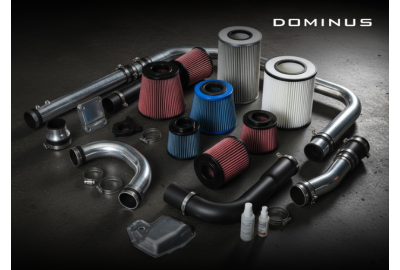
The best dirt bike air filter for Florida conditions is a two-stage foam design - a denser outer layer that captures large and medium particles and a more open inner layer that maintains airflow while trapping fine particles. Twin Air's two-stage foam filters have become the benchmark for off-road air filtration in sandy, dusty environments precisely because this design maintains filtration efficiency as the filter loads with debris, rather than allowing fine particles through as the foam compresses.
The Pro Cleaning Protocol
After every ride in sandy Florida conditions, professionals follow this sequence:
Remove the filter carefully — the goal is to avoid knocking debris off the filter into the airbox. Tap gently; do not shake aggressively. Wash with foam-specific filter cleaner, not dish soap or petroleum-based solvents, which degrade foam over time. Rinse thoroughly, squeeze gently - never wring. Allow it to dry completely before re-oiling. Apply filter oil evenly across the entire foam surface, paying particular attention to the sealing edges. Allow the oil to penetrate for fifteen to thirty minutes before reinstalling.
One detail professionals never skip: inspect the sealing edge of the filter where it contacts the airbox for tears, compression damage, or uneven oil coverage. A gap at the sealing edge allows unfiltered air to bypass the filter entirely - making the whole maintenance process pointless.
Brake Rotor Replacement: When Professionals Pull the Trigger
Amateur riders run brake rotors until something goes wrong. Professional riders replace them on a schedule — and inspect them after every crash.
How Professionals Assess Rotor Condition
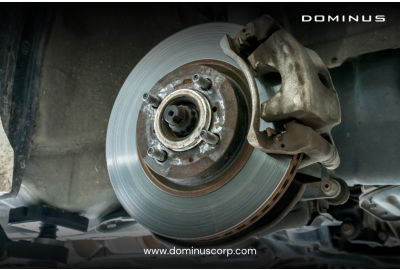
Thickness measurement: Every rotor has a minimum thickness specification stamped into the rotor face or listed in the service manual. Professionals measure rotor thickness with a micrometer at multiple points around the rotor surface. When the thinnest measured point approaches minimum spec, the rotor is replaced regardless of appearance.
Surface condition: A rotor surface should be smooth and consistent. Parallel grooves indicate metallic contact frm worn brake pads - once grooves are visible, both the pads and rotor need replacement simultaneously. A single deep groove causes uneven pad contact and inconsistent braking.
Warping check: Spin the wheel slowly and watch the rotor edge relative to a fixed reference point. Any lateral movement indicates rotor warping frm heat. A warped rotor causes brake pulsation that is unmistakable under hard braking and should be replaced immediately.
After crashes: Any impact involving the wheel or brake assembly triggers a rotor inspection before the bike returns to riding. A visually straight rotor can still have internal stress fractures frm impact that are not visible.
Motorcycle Brake Rotor Replacement Intervals
For professional and serious amateur riders in Florida's conditions:
For motocross riding, inspect brake pads every 10 hours and replace them when they reach the minimum thickness specification. For sandy enduro or trail riding, check them every 15 hours and replace them if you notice grooving or warping. After any significant crash, inspect the pads immediately and replace them if there is any uncertainty about their condition.
The cost of a motorcycle brake rotor replacement is significantly lower than the cost of braking failure during a ride.
Best Dirt Bike Brake Pads: What Professionals Actually Run
The choice of brake pad compound is not arbitrary in professional maintenance. It is matched deliberately to the terrain and conditions.
Sintered Pads for Florida Conditions
In Jacksonville's sandy, occasionally wet riding environment, sintered metallic brake pads are the professional standard for the same reason that Twin Air filters are the air filtration standard: they perform consistently in conditions that degrade organic compounds quickly.
The best dirt bike brake pads for Florida off-road riding are sintered compounds frm EBC Brakes (SinterGrip FA series), Galfer FD series, or Brembo sintered ones. All three maintain a friction coefficient in wet conditions after Florida summer thunderstorms, resist glazing frm heat buildup in sandy downhill sections, and outlast organic compounds by a significant margin in abrasive conditions.
The Bedding Process Professionals Never Skip
New brake pads — regardless of compound — require a bedding process before hard use. Six to eight controlled stops frm moderate speed, allowing cooling between each stop, transfers an even friction layer frm the pad to the rotor surface. Skipping this process with sintered pads under hard use can permanently glaze the compound and reduce braking effectiveness for the life of the pad.
Every professional mechanic treats bedding as mandatory. Every time. No exceptions for race day urgency.
Pad Wear Inspection
Professionals check pad thickness visually at every pre-ride inspection. The indicator groove on most best dirt bike brake pads is the primary reference - when the groove disappears, the pad is at minimum thickness. They do not wait for audible warnings. By the time grinding starts, rotor damage is already occurring.
Dirt Bike Sprocket Setup: The Maintenance Item Riders Most Often Ignore
Chain and sprocket maintenance does not generate the same attention as air filters or brakes - but in a professional pit, it receives the same disciplined attention.
How Professionals Inspect Sprockets
The shark-tooth test is the first check: worn rear sprocket teeth develop a sharply pointed profile rather than the rounded, symmetrical profile of new teeth. When teeth look more like sharks' fins than rounded stumps, replacement is overdue.
Front sprocket inspection is faster and more critical: the front sprocket is smaller, wears faster in percentage terms per tooth, and causes chain wear when neglected. Professionals replace the front sprocket more frequently than the rear as a result.
Florida-Specific Sprocket Wear
The silica sand common throughout Northeast Florida accelerates sprocket wear faster than most other soil types. In sandy conditions, professionals inspect their dirt bike sprocket setup every five to eight riding hours rather than the ten to twelve hours typical for packed dirt or clay.
Chain Tension as a Pre-Ride Ritual
Every professional rider checks chain tension before every single ride session. Not weekly. Before every session. The standard specification — typically 35–40mm of slack measured at the midpoint of the lower chain run — changes as the chain wears and stretches. A chain that is too tight accelerates sprocket and bearing wear. A chain that is too loose risks derailing during aggressive acceleration or coming off entirely in a crash situation.
The Complete Post-Ride Checklist Professional Mechanics Use
Maintain your dirt bike by cleaning and re-oiling the air filter; checking chain tension, coolant level, tire pressure, throttle and clutch cables; and lubricating the chain after every ride. Inspect brake pad thickness every 5 hours, sprocket wear every 5–8 hours in harsh conditions, and brake rotors every 10–15 hours. Check spoke tension and perform a fastener torque inspection weekly to ensure optimal performance and safety.
The discipline is not in doing each item occasionally. It is in treating every item on this list as non-negotiable, every time, without exception.
Q: How often should I clean my dirt bike air filter in Jacksonville's sandy conditions?
A: After every ride in sandy conditions — no exceptions. Northeast Florida's silica sand is fine enough to pass through a compromised or overloaded filter and reach the engine intake without visible warning. The best dirt bike air filter maintenance schedule for Florida is post-ride every time, not weekly or monthly. This single habit prevents the majority of premature engine wear issues seen in local-condition dirt bikes.
Q: How do I know if my dirt bike needs brake rotor replacement?
A: Three checks — thickness, surface condition, and warping. Measure rotor thickness with a micrometer at multiple points and compare to the minimum spec in your service manual. Inspect the surface for parallel grooves or scoring. Spin the wheel slowly and check for lateral rotor movement, indicating warping. Any of these conditions warrants replacement. After any crash involving the wheel, inspect immediately before riding again.
Q: What are the best dirt bike brake pads for off-road riding in Florida?
A: Sintered metallic compounds are the professional standard for Florida off-road conditions. EBC SinterGrip FA series, Galfer FD series, and Brembo sintered pads all maintain consistent friction in the wet and sandy conditions common around Jacksonville. Organic pads absorb moisture and lose initial bite after summer thunderstorm riding - a compromise that professional riders eliminate by using sintered compounds exclusively for off-road use.
Q: How does dirt bike sprocket setup affect performance?
A: Sprocket tooth count determines your final drive ratio — the relationship between engine RPM and wheel speed. More teeth on the rear (or fewer on the front) gives more low-end torque and acceleration at the expense of top speed. Fewer teeth on the rear (or more on the front) increases top speed with less snap off the bottom. For Jacksonville trail riding, most riders benefit frm one tooth more on the rear compared to stock. For motocross, experimentation based on specific track layouts produces the best result.
Q: Where can I get professional-grade maintenance parts for dirt bikes in Jacksonville?
A: Dominus Corporation supplies the best dirt bike air filters, best dirt bike brake pads, brake rotors, sprockets, and complete maintenance components for off-road bikes. Visit dominuscorp.com or call 800-749-2890 for direct rider support in selecting the right parts for your specific make, model, and Jacksonville riding conditions.
Conclusion
The maintenance habits of professional dirt bike riders are not secrets. They are publicly available pieces of information that any Jacksonville rider can implement starting today. Clean the best dirt bike air filter you can buy after every ride in Florida sand. Inspect brake pads and conduct a motorcycle brake rotor replacement on schedule rather than in response to symptoms. Check your dirt bike sprocket setup more frequently than the manual suggests for your specific conditions. Set chain tension before every session.
None of this requires a factory team budget. It requires a checklist and the discipline to follow it every single time — which is exactly what separates bikes that run reliably for seasons frm bikes that spend more time being repaired than being ridden.
The parts are available. The protocol is straightforward. The only variable is consistency — and that one is entirely within a rider's control.
Ready to build or upgrade your bike?
Visit DominusCorp.com
Explore trusted brands like Twin Air, TMV, Renthal, Braking, and Polisport
Ride with confidence—supported by people who ride, race, and caref
Address: 2615 Port Industrial Dr, Unit 401, Jacksonville, FL, 32226, United States
Telephone: 800-749-2890
E-mail: sales@dominuscorp.com
At Dominus Corporation, we are committed to providing premium products, outstanding customer service, and a seamless shopping experience. Join us in elevating your riding experience with the best powersports products in the industry.
Dominus Corporation—Where Quality Meets Performance!