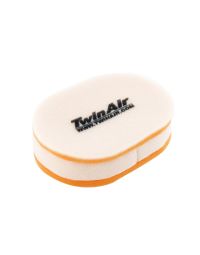
Twin Air filters outperform OEM filters in airflow, reusability, and long-term value - particularly for riders in demanding conditions. For Jacksonville dirt bike and motocross riders dealing with sandy trails, coastal humidity, and Florida heat, Twin Air's foam filter technology holds a meaningful edge over standard OEM paper or foam replacements. That said, OEM filters aren't without merit, especially for low-mileage street riders who prioritize simplicity over performance.
Why the Air Filter Debate Actually Matters in Jacksonville
Jacksonville isn't a generic riding environment. Between the sandy soil out toward the Ocala National Forest, the salt-laden air along the Intracoastal, and the kind of summer humidity that makes everything feel like it's running through a wet towel, your air filter is working harder here than it would be almost anywhere else in the country.
That's not a small thing. An air filter that performs adequately in dry, temperate conditions can become a liability in Northeast Florida's riding environment. And when you start looking at which filter actually holds up - OEM replacement or aftermarket options like Twin Air - the differences aren't just marketing copy. They show up in how your bike runs, how often you're pulling the filter out for cleaning, and ultimately, how long your engine stays healthy.
This Twin Air filter review is designed to cut through the noise and give Jacksonville riders a practical, honest answer.
What Is Twin Air? A Quick Background
Twin Air is a Dutch company that's been manufacturing motorcycle air filters since 1973. They didn't start as a lifestyle brand - they started in motocross racing, supplying filters for factory teams and working out the engineering in genuinely harsh race conditions.
That racing lineage matters. Twin Air's foam filter design was developed under conditions where a filter failure meant a blown engine in front of thousands of spectators. That tends to focus the engineering.
Today, Twin Air filters are available for the full range of off-road, motocross, and dual-sport bikes, and they've become one of the most referenced aftermarket options in the Twin Air vs OEM filter conversation.
OEM Air Filters: What You're Getting Frm the Factory
OEM stands for Original Equipment Manufacturer - in other words, the filter that comes stock with your bike or the direct replacement your dealer stocks.
The Case for OEM
OEM filters aren't bad products. They're engineered to meet the manufacturer's specifications for your specific engine, which means they're matched to your bike's airflow requirements, carburetor or fuel injection calibration, and intake geometry. For a commuter or a rider who puts in moderate street miles on clean pavement, an OEM filter does exactly what it's supposed to do.
OEM filters also require zero guesswork. You buy the replacement, you install it, you move on. No re-oiling, no drying time, no filter-specific maintenance steps.
Where OEM Falls Short
The limitations of OEM filters become more apparent in higher-demand situations:
Airflow restriction. Many OEM paper filters prioritize filtration efficiency over airflow volume. That's a reasonable tradeoff for general use, but it means you're leaving some performance on the table - particularly at higher RPMs.
Single use. Paper OEM filters are not designed to be cleaned and reused. When they're saturated, you replace them. Over the life of a bike ridden in Florida's dusty conditions, that adds up.
Faster loading in dirty environments. A paper filter in sandy, silty soil will clog faster than a properly oiled foam alternative. In a place like Jacksonville, where many riders are heading out to trails with fine sugar sand, this becomes a real-world maintenance issue, not a theoretical one.
Twin Air Filter Review: What Sets It Apart
The Foam Difference
Twin Air's core technology is their multi-layer foam design. Unlike paper filters, foam filters work by mechanically trapping particles in a matrix of open-cell foam that's been treated with a specific filter oil. The oil creates a tacky surface that captures fine particulates while still allowing air to move through freely.
The result is a filter that flows more air than a comparable paper OEM unit while still maintaining strong filtration - a combination that's difficult to achieve with paper media.
Dual-Layer Construction
Twin Air's standard filters use a two-layer foam construction: a coarser outer layer that catches larger debris and a finer inner layer that handles the smaller particles. This staged approach keeps the filter functional longer between cleanings because the outer layer pre-filters the heaviest contamination before it reaches the inner media.
For riders hitting trails around Gold Head Branch State Park or running the dunes near St. Augustine Beach, this matters. Fine silica sand is particularly destructive to engines - it acts as a lapping compound on cylinder walls. A filter system that stages its filtration is protecting your engine more intelligently than a single-media alternative.
Reusability and Long-Term Cost
A Twin Air filter, properly maintained, can be cleaned and reused dozens of times. The filter itself costs more upfront than a stock OEM replacement, but the math shifts quickly when you account for:
-
Multiple OEM replacements over the same period
-
The cost of cleaning supplies (which are modest) versus new filters
-
The extended service interval a properly oiled foam filter can achieve
A Jacksonville rider who's out on trails every other weekend and cleaning their filter regularly will spend less on air filtration over a riding season with a Twin Air than with sequential OEM paper replacements.
Performance Under Florida Conditions
This is where the Twin Air vs OEM filter debate gets concrete for local riders. In Jacksonville's environment specifically:
Humidity - Twin Air foam handles moisture exposure better than paper. A saturated paper filter loses structural integrity and filtration efficiency simultaneously. Foam maintains its form.
Sand and silt - The oiled foam surface traps fine particles more effectively than dry paper media in high-particulate environments. Properly maintained, it won't allow bypass filtration the way an overloaded paper filter can.
Heat - Florida summers are hard on everything. Foam doesn't degrade as quickly under repeated heat cycling as some paper media does.
Twin Air vs OEM Filter: Side-by-Side Comparison
When comparing Twin Air filters to OEM air filters, Twin Air generally provides higher airflow, making it a popular choice for riders seeking improved engine performance. Filtration remains excellent when the filter is properly maintained, while OEM filters offer good protection for everyday use. Twin Air filters are reusable and can withstand many cleaning and re-oiling cycles, reducing long-term costs despite a higher upfront price. OEM paper filters are usually disposable, and OEM foam filters have limited reuse. For performance riding, motocross, trail riding, and demanding off-road conditions, Twin Air filters deliver a clear advantage. OEM filters, however, are ideal for casual street riding and riders who prefer a simpler, lower-maintenance option.
Motorcycle Air Filter Maintenance: Getting the Most frm Either Filter
Regardless of which filter you choose, Motorcycle Air Filter Maintenance habits determine how well it actually performs.
Cleaning Intervals
OEM paper filters: Visual inspection every oil change interval. Replace when discolored, compressed, or when light no longer passes through.
Twin Air foam filters: After every ride in dusty or sandy conditions. Every 3–5 rides in moderate conditions. Never skip the re-oiling step - a clean, dry foam filter is almost as problematic as a dirty one.
The Re-Oiling Process
This is the step most riders either rush or skip entirely, and it's the one that matters most with foam filters.
After cleaning and fully drying your Twin Air filter:
-
Apply filter oil evenly across the entire foam surface
-
Work it in by hand until the color is uniform - no dry patches, no pooling
-
Allow it to rest for 20–30 minutes before installation to let the oil fully distribute
-
Check the airbox sealing surfaces before reinstalling - a well-maintained filter paired with a leaking airbox is still a problem
A Real-World Jacksonville Example
A motocross rider who trains regularly at a local track switches frm OEM replacements to a Twin Air filter after going through three paper filters in a single riding season. After making the switch, they're cleaning the foam filter after every session, spending roughly 15 minutes on maintenance, and are now well into the season without a replacement purchase. The bike pulls cleaner through the midrange, and the filter shows no signs of needing retirement.
That's not an unusual outcome. It's a straightforward result of using the right tool for the riding conditions.
FAQ: Twin Air vs OEM Air Filters
Is a Twin Air filter worth it for street bikes?
For primarily street-ridden motorcycles in light-duty conditions, the OEM filter is perfectly adequate. The Twin Air advantage is most pronounced in off-road, motocross, and mixed-use scenarios where filtration demands are higher.
How often should I clean my Twin Air filter in Jacksonville?
In Jacksonville's sandy, humid conditions, clean after every ride if you've been on unpaved terrain. Street riding extends the interval - inspect every 500–800 miles and clean when visually dirty.
Can I use any filter oil on a Twin Air filter?
Twin Air produces their own filter oil and cleaner formulated for their foam. Generic filter oils can work, but using the matched product ensures the viscosity and tackiness are appropriate for the foam density.
Does a Twin Air filter require jetting changes?
On carbureted bikes, an increased-airflow filter can occasionally require minor carburetor adjustment. Fuel-injected bikes adapt automatically. If you notice lean symptoms after installation, consult a local shop for a quick assessment.
Where can I get my air filter serviced in Jacksonville?
Several powersports shops in the Jacksonville area stock Twin Air filters and filter maintenance supplies. If you're not comfortable with the re-oiling process, a local shop can walk you through it or handle it as part of routine service.
Conclusion
If you're a Jacksonville rider spending real time on Florida's trails, the Twin Air filter is the better long-term investment. The airflow advantage, reusability, and performance in sandy, humid conditions all point in the same direction. OEM filters remain a reasonable choice for casual street riders who value simplicity - but for anyone pushing their bike in demanding conditions, the Twin Air is doing more work where it counts.
Know your riding environment. Maintain your filter consistently. And when Jacksonville's trails are throwing everything they've got at your intake, make sure your filter is up to the job.
Ready to build or upgrade your bike?
Visit DominusCorp.com
Explore trusted brands like Twin Air, TMV, Renthal, Braking, and Polisport
Ride with confidence—supported by people who ride, race, and caref
Address: 2615 Port Industrial Dr, Unit 401, Jacksonville, FL, 32226, United States
Telephone: 800-749-2890
E-mail: sales@dominuscorp.com
At Dominus Corporation, we are committed to providing premium products, outstanding customer service, and a seamless shopping experience. Join us in elevating your riding experience with the best powersports products in the industry.
Dominus Corporation—Where Quality Meets Performance!